
The Future of the Lecture Hall
The traditional lecture model has not changed much in about five hundred years. A professor stands at a podium in the front of a room and talks for an hour while students sit in tiered rows and take notes. But after the massive shift to remote learning a few years ago, we are finally starting to ask if this is actually the best way to learn. With the rise of high-quality digital content and immersive tech, the “sage on the stage” model is starting to look a bit like a relic of the past.
We are moving toward a future where the physical classroom is used for high-value interaction rather than just information delivery. This is often called the “flipped classroom” model. You watch the core lecture at your own pace on your laptop, and then you show up to class to actually solve problems, debate theories, or work on projects with your peers. It turns the professor from a narrator into a coach. This shift is essential because our brains are no longer wired to just sit and absorb information for ninety minutes straight without any feedback loop.
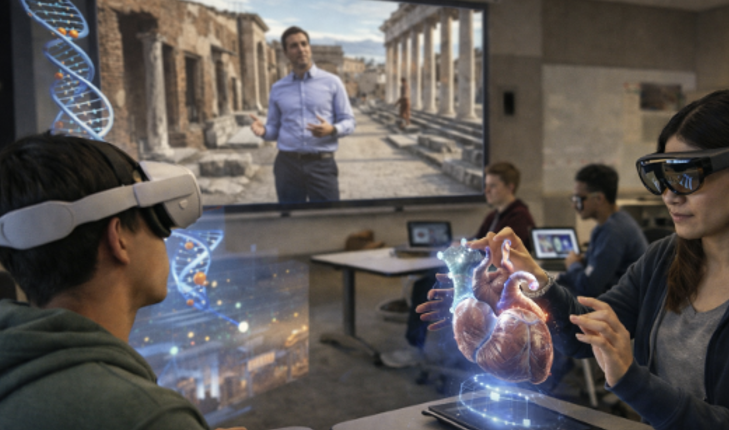
The next step is likely going to involve Virtual Reality and Augmented Reality. Imagine a history class where you can virtually walk through the streets of ancient Rome or a biology lab where you can manipulate a 3D model of a human heart with your hands. These tools are not just flashy gimmicks. They provide a level of engagement that a PowerPoint slide simply cannot match. The lecture hall of the future will probably be less about rows of chairs and more about flexible spaces where technology and human collaboration actually meet.
Kelly Lee